EV Charger Installation in Western MA: What Homeowners Need to Know
Your EV is ordered, the delivery date is getting close, and now you have to figure out how charging at home actually works. For many homeowners, EV charger installation Western MA is not as simple as plugging in a new appliance. It is an electrical service decision that depends on your panel capacity, charger location, permit requirements, and which utility serves your home.
The right setup can make daily charging much easier, especially through New England weather. The key is knowing what your home can safely support before buying equipment.
Level 1 vs. Level 2 Charging
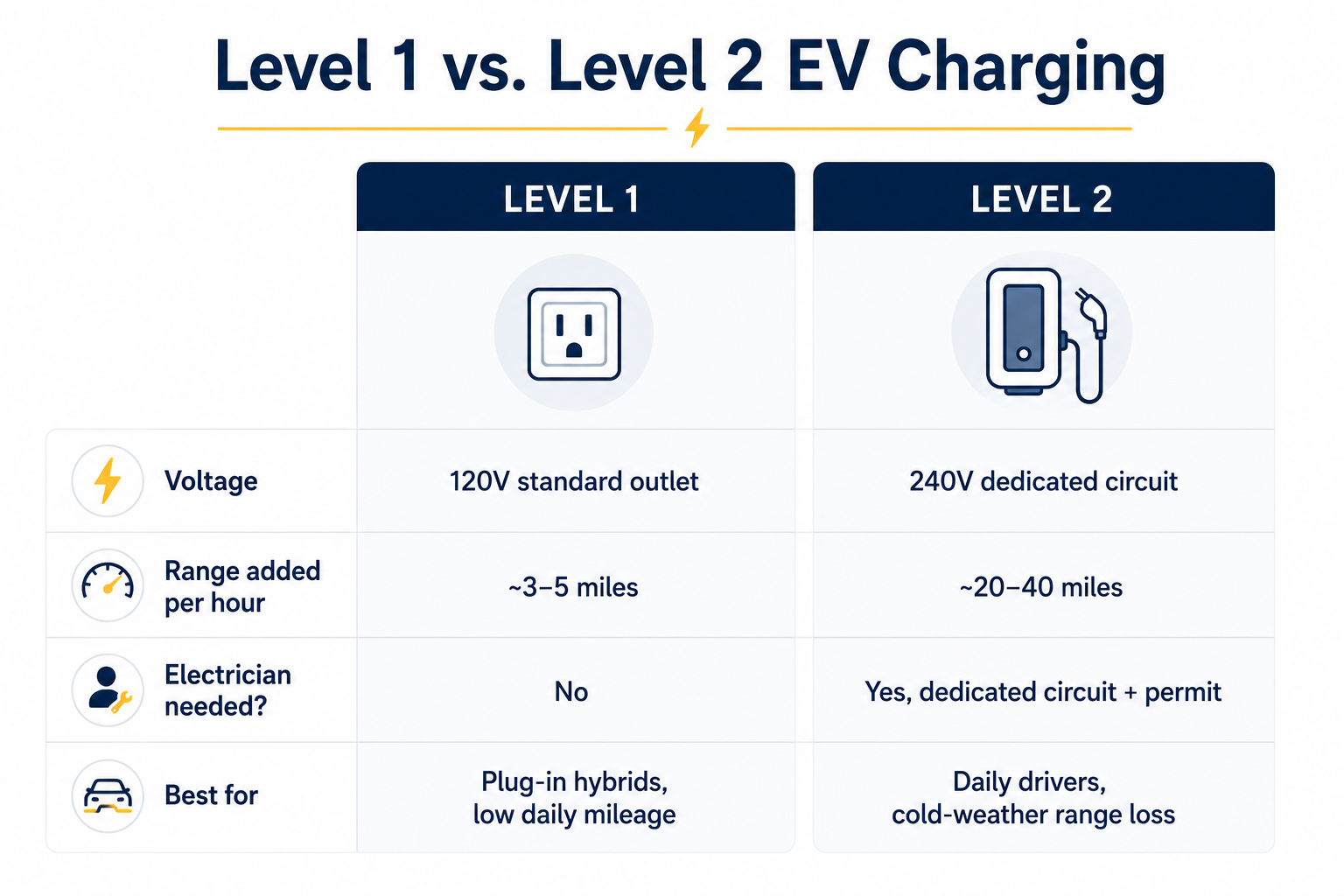
Level 1 charging uses a standard 120-volt outlet. It can work for plug-in hybrids, short commutes, or homeowners who do not drive much each day. The tradeoff is speed. Level 1 charging usually adds only a few miles of range per hour, which can make it hard to recover a full day of driving overnight.
Level 2 charging uses a dedicated 240-volt circuit. This is the more practical option for most daily EV drivers because it can add much more range while the car sits overnight. A Level 2 setup may use a hardwired charger or a 240-volt outlet such as a NEMA 14-50 outlet, depending on the charger and installation plan.
Western MA winters make this choice more important. Cold weather can reduce EV range and increase the power needed for battery preconditioning, so the charging math that works in a mild climate may not work as well in Belchertown, Amherst, Chicopee, or other parts of the Pioneer Valley. Homeowners who already deal with cold weather electrical problems know winter can put extra demand on a home’s electrical system.
Does Your Panel Have Room?
Before a quote can be accurate, an electrician needs to know what your existing electrical panel can handle. Some homes have enough capacity for a Level 2 charger. Others may need an electrical panel upgrade before the charger can be installed safely.
Many older homes in Western Massachusetts still have 100-amp service. That does not automatically mean a charger is impossible, but it does mean the electrical load needs to be checked carefully. A licensed electrician performs a load calculation to review the home’s existing electrical demand and determine what capacity is available.
This is also where cost starts to take shape. EV charger installation cost in Massachusetts depends on the home, not just the charger. Cost factors can include panel capacity, distance from the panel to the charger location, indoor vs. outdoor installation, trenching, permit fees, hardware choice, and whether the charger will be hardwired or connected through a 240-volt outlet.
Some homes need a full panel upgrade. Others may be able to use load-management equipment, depending on the home and local code requirements. A trustworthy electrician should explain the options clearly instead of assuming the most expensive route from the start.

Garage, Driveway, or Detached Building
The charger location also affects the installation. An attached garage is usually the most straightforward setup because the wiring path is often shorter and the charger can be protected indoors.
Driveway installations need outdoor-rated equipment and proper placement. The charger has to be set up for weather exposure, safe cable reach, and everyday use. This is common for homes without garage parking or for families who park outside.
Detached garages, barns, and outbuildings can be more involved. In areas around Belchertown, Ware, Granby, and other Western MA towns, detached structures are common. These projects may require garage electrical wiring, a trenched feeder run, or additional planning before the charger can be installed.
Permits and Inspection in Massachusetts
EV charger installation usually requires a permit and inspection in Massachusetts. This work is handled town by town through the local wiring inspector, and the goal is to confirm the installation is safe and code compliant.
This is not the type of project homeowners should leave unpermitted. Unpermitted electrical work can create safety concerns and may cause problems later with insurance, resale, or future home inspections.
B-Town Electric has more than 40 years of experience serving Western Massachusetts and operates under Master Electrician License #15648A. Working with a licensed local electrician helps make sure the project is planned, permitted, and installed the right way.
EV Charger Rebates in 2026
EV charger rebates changed in 2026, and this is where many older articles online are now outdated. The federal Section 30C Alternative Fuel Vehicle Refueling Property Credit applies to eligible property placed in service through June 30, 2026, according to the IRS. That means homeowners should treat the federal charger credit in the past tense after that date, not as an ongoing program.
Utility programs may still be available, but the rules depend on which utility serves your home. Mass Save lists EV charging equipment resources for Massachusetts customers through providers such as Eversource, National Grid, and Unitil.
National Grid’s Massachusetts EV Charging Upgrade Program states that installations completed between January 1, 2026 and December 31, 2026 must apply by March 31, 2027. Its 2026 residential application also references qualified Level 2 charger and wiring upgrade work during that 2026 window.
Check Your Utility Before Buying a Charger
In Western MA, the utility picture is more local than many national guides suggest. Most homeowners think about the larger utility companies first, but some communities run municipal light plants with separate EV programs.
MMWEC lists municipal utilities including Chester Municipal Electric Light Department, Chicopee Electric Light, Holyoke Gas & Electric, South Hadley Electric Light Department, Russell Municipal Light Department, and Westfield Gas & Electric among its public power members and related programs.
The important takeaway is simple: check the utility name on your bill before buying an EV charger. A homeowner in Belchertown and a homeowner in Holyoke may live only a short drive apart, but they could qualify for different programs with different equipment rules. Buying the wrong charger before checking the program requirements could cost you a rebate.
B-Town Electric also serves local homeowners looking for an electrician in Chicopee, MA and surrounding Western MA communities, where utility rules can vary from town to town.
EV Charger Installation Support
Home EV charging can make owning an electric vehicle much easier, but the installation should be planned around your specific home. Panel capacity, charger location, permits, and rebate rules all matter.
B-Town Electric provides residential electrical services throughout Hampden, Hampshire, and Franklin Counties. With 40+ years of experience, Master Electrician License #15648A, A+ BBB accreditation, and free estimates, B-Town Electric can help you plan a safe, practical charging setup for your home.
To get started, contact a residential electrician in Western Massachusetts or request a free estimate today.
Frequently Asked Questions
Can I just plug my EV into a regular outlet?
Yes, Level 1 charging uses a regular 120-volt outlet. It is the slowest charging option and may not be practical for daily driving, especially in a Western MA winter.
Do I need a 200-amp panel to install an EV charger?
Not always. Some homes can support a Level 2 charger without a panel upgrade. Others may need a load calculation, load-management equipment, or a panel upgrade before installation.
Do I need a permit to install an EV charger in Massachusetts?
Yes, this type of electrical work usually requires a permit and inspection through the local wiring inspector. A licensed electrician can handle that process.
How much does EV charger installation cost?
Cost depends on the panel, charger location, wiring distance, indoor or outdoor setup, permit fees, charger hardware, and whether trenching or a panel upgrade is needed.
Questions? Contact our main office
Schedule a Free Quote. Submit a free quote request online